


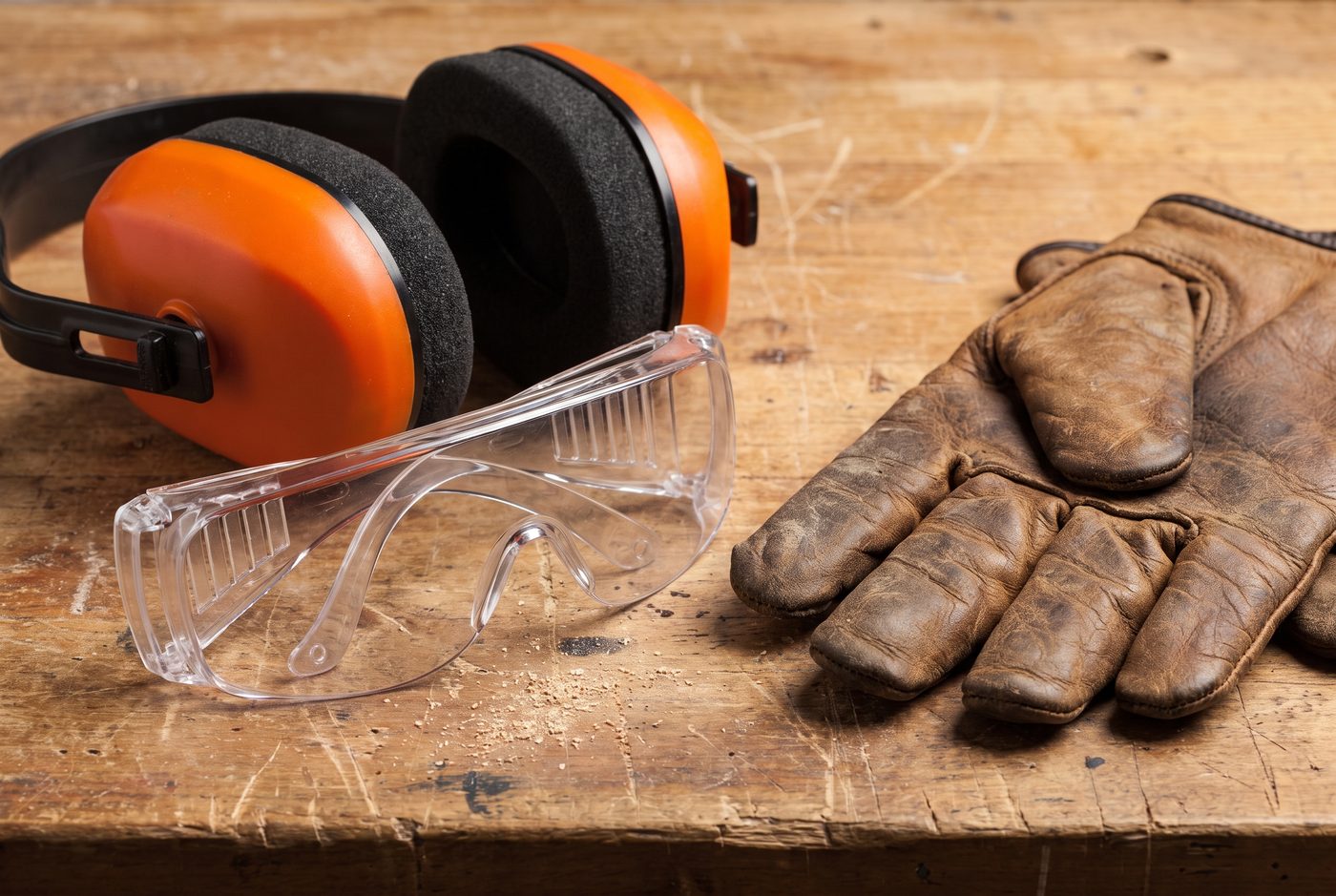
Eye and ear protection sit in a different category to most workwear. They are not there to withstand wear and tear, they are there to prevent a specific, often irreversible injury: eye damage from impact, dust or splash, and hearing loss from prolonged noise exposure. Both are covered by their own European standards, and both carry markings that tell you exactly what a product was tested for. Reading them correctly matters, but deciding which level you need still comes down to your own risk assessment.
Eye protection: EN 166
EN 166 is the general standard for personal eye protection, covering safety glasses, goggles and visors. It sets basic requirements, then adds optional markings for specific hazards. A pair of safety glasses will usually carry two sets of markings: one on the frame, one on the lens.
Impact resistance markings
| Symbol | What it means |
|---|---|
| S | Increased robustness (basic impact resistance) |
| F | Low-energy impact (approx. 45 m/s) |
| B | Medium-energy impact (approx. 120 m/s) |
| A | High-energy impact (approx. 190 m/s) |
These letters describe the speed and energy of a particle the lens has been tested to withstand, not a general "strength" rating. Higher letters mean a higher tested impact energy, which usually means a more specialised (and often heavier) lens.
Other common markings
- 3 – protection against liquid droplets and splash.
- 4 – protection against large dust particles.
- 5 – protection against gas and fine dust.
- 9 – protection against molten metal splash and hot solids.
- K – resistance to surface damage from fine particles (anti-scratch, tested to a specific standard).
- N – anti-fog performance that resists misting on both sides of the lens.
Ear protection: EN 352
EN 352 covers hearing protectors, split into parts for ear muffs, earplugs and other formats. The figure most people look for is the SNR, or Single Number Rating, which estimates how many decibels of noise the protector reduces when worn correctly.
Reading an SNR figure
SNR is expressed in decibels, for example SNR 28. As a rough guide, you subtract most of that figure from the noise level at the ear to estimate the protected level, though the real-world reduction is usually lower than the lab figure because of fit and wear. Some products also carry an HML rating (High, Medium, Low), which gives a breakdown across different frequency bands rather than one single number, useful where the noise is mostly high or low pitched rather than broadband.
Fit matters as much as the rating
Highly rated safety glasses or ear defenders that do not fit properly protect far less than the label suggests. Glasses that sit loosely leave gaps at the brow and temple; ear muffs that do not seal against the head, including over long hair, beards or the arms of safety glasses, lose much of their rated attenuation. If a team is struggling to get a consistent fit, it is worth reviewing the product, not just reissuing the same one.
Where this sits with other PPE standards
Eye and ear protection are two of several PPE categories covered by their own dedicated EN standards. Our guide to reading EN standards on a workwear label puts the main categories side by side, and the safety helmets and bump caps guide covers head protection markings in the same way.
The short version
On safety glasses, the letters (S, F, B, A plus any hazard-specific marking) describe what impact or hazard the lens was tested against. On ear defenders, the SNR or HML figures describe the tested noise reduction. Neither marking tells you what your workplace needs, that comes from your own risk assessment. Once you know the rating your assessment specifies, we will match products to it precisely.
