



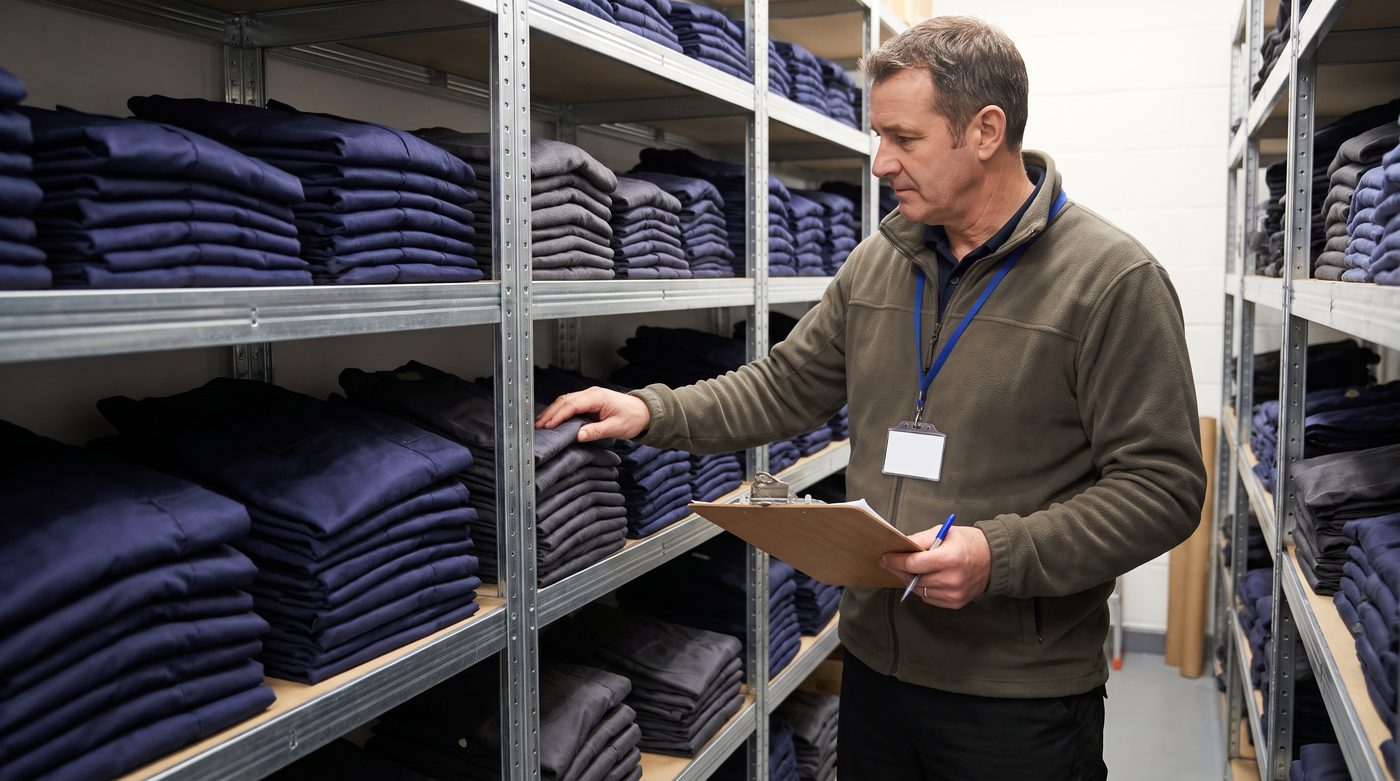
Workwear tends to get ordered when someone needs it, which means nobody looks at the whole picture until something runs out. A short review once a year helps you spot worn kit, plan for new starters, check your protective equipment and set a sensible budget. Here is a checklist you can work through before the new year.
1. Check the condition of current kit
Look for faded colours, worn knees and cuffs, broken zips and peeling prints. Hi-vis and protective items need particular attention, as worn or dirty garments may no longer do their job. See our guide on when to replace workwear.
2. Update your headcount and roles
List who you have now and who you expect to hire. New roles may need different kit, and planned recruitment is easier to budget for than surprise orders. Our new starter workwear checklist helps here.
3. Refresh your size records
Keep an up-to-date record of each person's sizes. It makes reorders faster and cuts down on returns. See our sizing guide and women's fit guide.
4. Revisit your risk assessments
If work, sites or tasks have changed, your risk assessments may call for different protective equipment. Check that the PPE you buy still matches what your assessments say, and remember that required PPE should be provided free to the people who need it. See workwear vs PPE: who pays?
5. Check your branding is consistent
Has your logo changed? Do some teams have older versions? A review is a good moment to agree one logo, one set of colours and one set of positions for every garment. See our logo placement guide and company uniform policy guide.
6. Plan seasonal kit early
Order summer and winter kit before the weather turns, not after. See our winter layering guide and summer workwear guide.
7. Set a budget and a reorder plan
Combine the above into a simple plan: what to replace, what to add for new starters and when to order. A uniform allowance or rotation can help spread the cost. See our uniform allowance and rotation guide and branded workwear cost guide.
8. Deal with old kit responsibly
Branded garments that are being retired should not end up being worn by people who do not work for you. See our guide to disposing of old branded workwear.
The short version
Check condition, update headcount and sizes, revisit PPE against your risk assessments, tidy up your branding, plan seasonal kit and set a budget. An hour spent now saves a lot of rushed orders next year.
