

High-visibility clothing is one of the simplest pieces of safety kit to get right, and one of the easiest to get wrong by buying the wrong class or letting it wear out. This guide explains the standard, the three classes and the duties on employers in plain English, so you can make a confident decision for your team.
Is hi-vis a legal requirement?
There is no single law that says every worker must wear hi-vis. Instead, the duty comes from risk. Under the Health and Safety at Work etc. Act 1974 and the Personal Protective Equipment at Work Regulations, employers must assess the risks their staff face and provide suitable protective equipment, free of charge, where those risks cannot be controlled in other ways.
In practice that means if your team works around moving vehicles, plant, traffic or in poor light, a risk assessment will usually call for high-visibility clothing. The assessment, not guesswork, decides whether hi-vis is needed and to what level.
The standard: EN ISO 20471
High-visibility clothing sold for workwear in the UK is certified to EN ISO 20471, the standard that replaced the older EN 471. It sets out how much fluorescent background fabric and retroreflective material a garment must carry, and tests how that performs. Certified garments carry the standard on their label along with a class number.
The fluorescent background does the work in daylight, while the reflective bands bounce light back to a driver's headlights at night. A garment needs both, in the right amounts, to meet a given class.
The three classes explained
Lowest coverage
The least background and reflective material, often seen on hi-vis trousers or lightweight items. Suited to lower-risk environments away from fast traffic.
Mid coverage
Typically a hi-vis vest, waistcoat or polo. A common choice for general site work, deliveries and warehouse yards.
Highest coverage
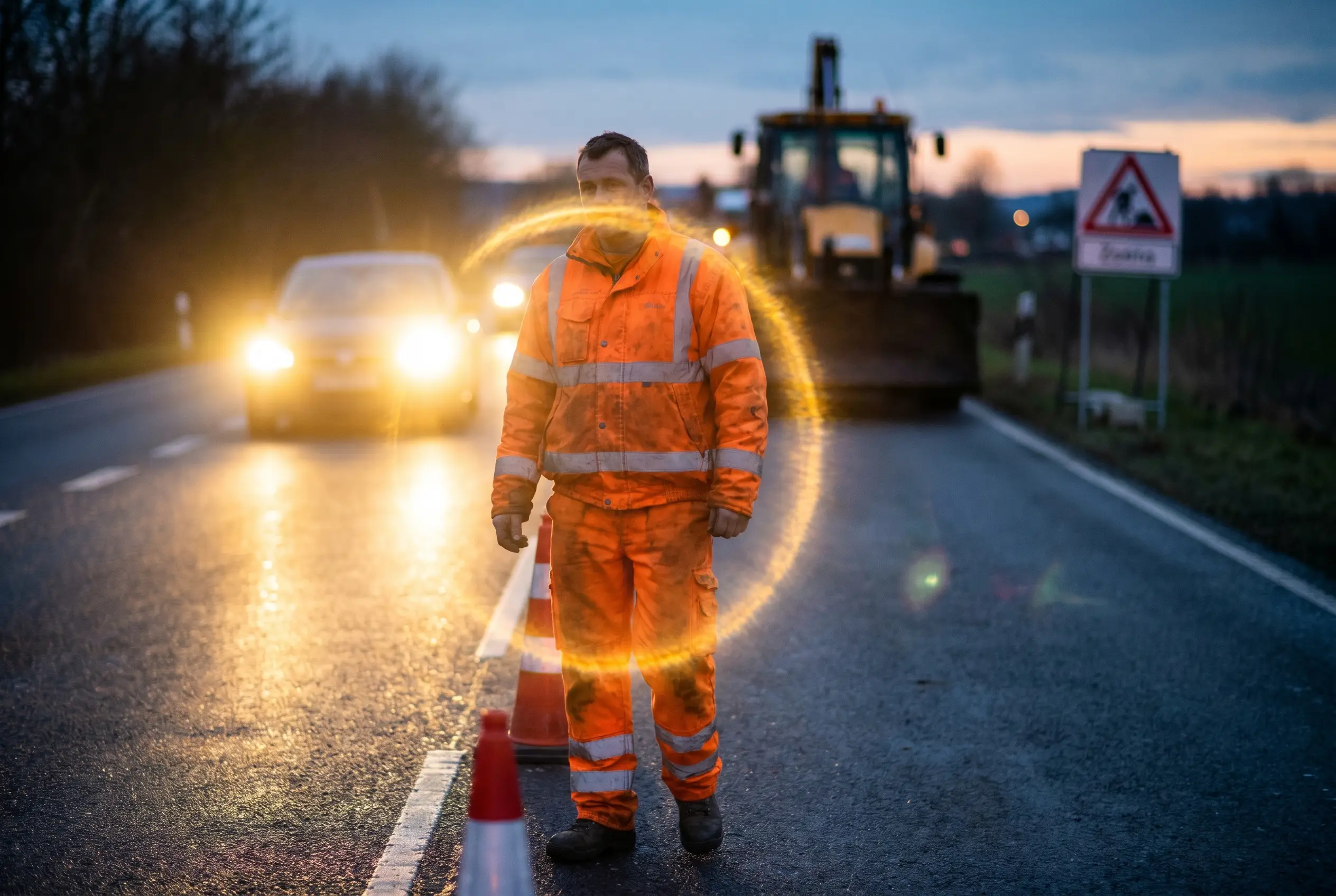
The most visible level, which generally needs a sleeved garment such as a jacket so there is enough material to qualify. Used near fast-moving traffic and in poor visibility.
A useful way to think about it: the higher the speed and risk around your team, and the worse the light, the higher the class they are likely to need. Garments can also be combined, for example a Class 2 vest worn with Class 1 trousers, to raise overall visibility.
When does each class apply?
The right class depends on the setting, and some sectors have their own published requirements on top of the general standard:
- Roadworks and the highway: work on or near roads is governed by stricter rules, and Chapter 8 of the Traffic Signs Manual sets out high-visibility requirements for working on the highway. Class 3 is commonly specified for higher-speed roads.
- Rail: work on the railway has its own specification for hi-vis, including the use of orange garments to a defined standard, so always follow the rules for the network you work on.
- General sites, yards and deliveries: a risk assessment often points to Class 2 as a sensible baseline, stepping up to Class 3 where traffic is faster or light is poor.
If you are unsure, your risk assessment and any client or site rules take priority. We are happy to help you match garments to the class you need.
Colours and certification
EN ISO 20471 allows fluorescent yellow, orange-red and red background colours. Whichever you choose, check the label shows the EN ISO 20471 standard and a class number, and that the garment carries the appropriate conformity marking. That label is your evidence the kit actually performs, rather than just looking bright.
Keeping hi-vis effective
Hi-vis only protects people while it stays visible. Fluorescent fabric fades, dirt and grease dull it, and reflective tape degrades with washing and wear. A faded, grubby garment may no longer meet its class even if the label still says it does.
- Follow the wash instructions and respect any stated maximum number of wash cycles
- Inspect garments regularly and replace anything faded, stained or with damaged reflective tape
- Keep a few spares so worn-out kit is swapped out promptly, not kept in service
Need compliant kit your team will actually wear? Browse our hi-vis workwear range, all certified to EN ISO 20471 and ready to brand with your logo.
Employer checklist
- Carried out a risk assessment that covers visibility hazards
- Selected the right class for each role and setting
- Checked any sector rules, such as roadworks or rail requirements
- Confirmed garments are labelled to EN ISO 20471 with a class number
- Set up a replacement routine so worn kit is retired in good time
This guide is general information to help you choose hi-vis workwear, not legal advice. Always base decisions on your own risk assessment and current HSE guidance, and follow any specific rules for your site or sector.
